
Find Nassau County Resident Trails
Nassau County keeps no master roll of households. The right record depends on the question. The assessment viewer answers parcel needs. The County Clerk index lists recorded parties. Historical directories capture an earlier household. The state voter tool matches one voter at a time. It offers no browsable street roster. Court, vital, business, and license records add narrow identity context. None of them amounts to a complete list of current residences.
A practical Nassau County residents directory search begins with the most stable identifier. For property, that is a street address. Or a Section, Block, and Lot number, called an SBL. For a person, write down a full name, a likely municipality, and a time period. Then test the result against a second official source. Nassau County mixes towns, cities, villages, and post-office names. That mix makes the extra check especially worth the trouble.
- Search the address in the assessment viewer and save the SBL and situs address.
- Use the recorded-land index to test the owner name, legal description, and document date.
- Use the state voter lookup only for its intended identity match.
- For an older household, consult a city directory, newspaper, census, or map collection.
- When a documented record is not online, ask its custodian for the correct counter, mail, archive, or FOIL route.
Nassau County Resident Record Offices
Three offices anchor most Nassau County residents directory searches. The Department of Assessment keeps the parcel and tax-map side of the picture. The County Clerk holds land records and several legal-record functions. The Board of Elections runs local election records. The state lookup carries individual-use limits. Because Nassau County is not a single-city jurisdiction, town, city, and village offices may be the right custodian for permits, vital certificates, or local files.
Department of Assessment
240 Old Country Road, 4th Floor
Mineola, NY 11501
516-571-1500
Nassau Board of Elections
County election administration
Individual records have special access rules.
Nassau County Parcel Search Fields
The Land Records Viewer is the clearest first move. It works when a Nassau County address is in hand. The form takes house number, street, town, and ZIP. An SBL works too. Enter it as Section, Block, and Lot. Leave the direction and suffix out of the street field under the county's form convention. Results can include assessment-roll material, district information, tax maps, parcel photos, tax history, exemptions, comparable sales, and a GIS connection. A mailing address for the owner proves nothing about occupancy.
| Viewer field | Format | Use | Care point |
|---|---|---|---|
| House Number | Text | Starts an address search | Pair it with the street name |
| Name of Street | Text | Finds the parcel street | Leave off direction and suffix |
| Town and ZIP | Selections or text | Narrows similar addresses | Postal labels can differ from municipality |
| Section, Block, Lot | Three SBL fields | Identifies a legal parcel | Save it before moving to deeds |
The Land Records Viewer page shows the parcel form.
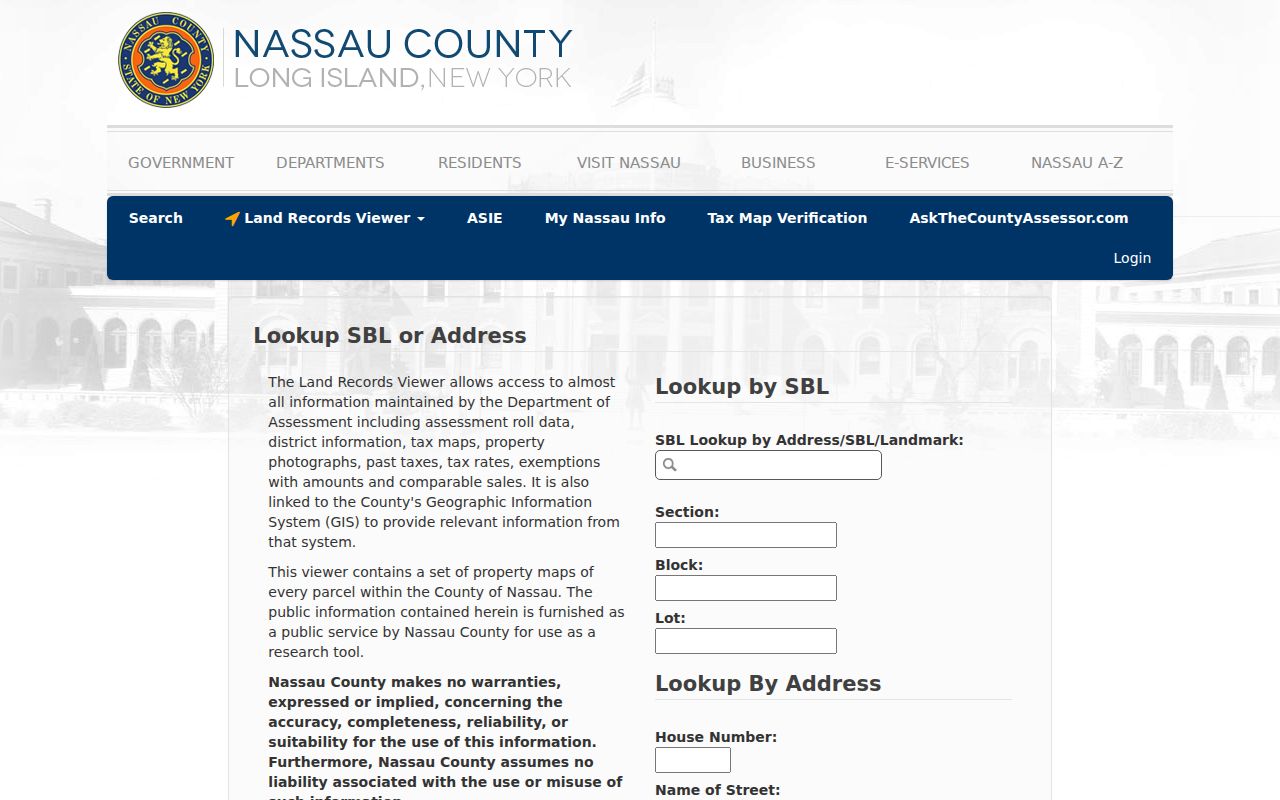
The form is a starting point. A parcel hit alone is not proof of household membership, so follow it with the document and date that answer the real question.
Current Nassau County Resident Sources
Current Nassau County resident facts come from different records. The assessment roll centers on owners. The Clerk index lists parties to recorded documents. A state voter match relates to registration and polling, not to any public list by street. Court and professional records can identify a person in a case or license context. Every result needs a date and a second check before it counts as evidence about a particular person.
| Source | What it can show | Custodian | Access channel |
|---|---|---|---|
| Assessment and tax data | Parcel, owner, mailing and situs details | Department of Assessment | Land Records Viewer, counter, copy request |
| Recorded land index | Grantors, grantees, dates, legal descriptions | County Clerk | Historic and current online indexes, counter, mail |
| Voter registration match | Registration and polling information for a matching voter | New York election authorities | Identity-match lookup and controlled request routes |
| Court party index | Case-linked party name and docket context | New York courts | Web portal or courthouse records access |
| Local history materials | Older household, address, and community clues | Libraries and archives | Catalog, microform, staff, or appointment |
Address-first research has a better path. The Nassau County street directory walks the parcel-to-deed sequence in detail, which beats forcing a name-only result to answer an address question.
Nassau County Clerk Index Eras
The County Clerk's records supply an ownership trail. They give a Nassau County residents directory its land-record backbone, not a household roll. The historic repository spans 1840 through 1982. It includes direct and reverse index books, deed records, plat books, and OCR text options. The land registry itself begins in 1899. County materials describe a shift from books and microfilm to an electronic database around 1992. The current Official Records system offers free searching and document images from February 22, 1994 forward, with older material added periodically.
Use the fields together. Party name, document type, date range, book reference, and legal description belong in one search. A grantor gives an interest in a document. A grantee receives one. A hit proves recorded-party status on a date, not a present home address, and downloaded image pages cost $0.65 each, leaving a free search result, an image, and a certified copy as separate products.
The historic Official Records repository shows the reverse and direct index choices that carry a deed trail backward. Old handwriting defeats text search. Older scans do too. Browse the right index books instead. When a sensible name search fails, ask the Clerk about counter access to the older volumes.
Nassau County Voter Match Limits
New York's voter lookup works by matching, not browsing. It asks for a name, date of birth, county, ZIP, and address details. Nothing is returned before those details are entered. That design makes it a verification tool. It is not a Nassau County residents directory arranged by street, block, or ZIP code. Election Law §3-103(5) also restricts nonelection use of individual registration data. The April 2026 VEDA change concerns aggregate publication. It does not create a public online roll of individual voters. Treat any match as an answer to one registration question and nothing more.
A match may be missing. An election record may be unavailable. The authorized election records process is the correct channel in those cases. A blank result does not prove a person is unregistered or gone from Nassau County. Confidential registration rules and address-protection programs create legitimate gaps. What can be released depends on the person and the record date. The municipality and the purpose of the request also matter. The New York State voter lookup shows the name-and-address matching route. That is the route used for an individual search.
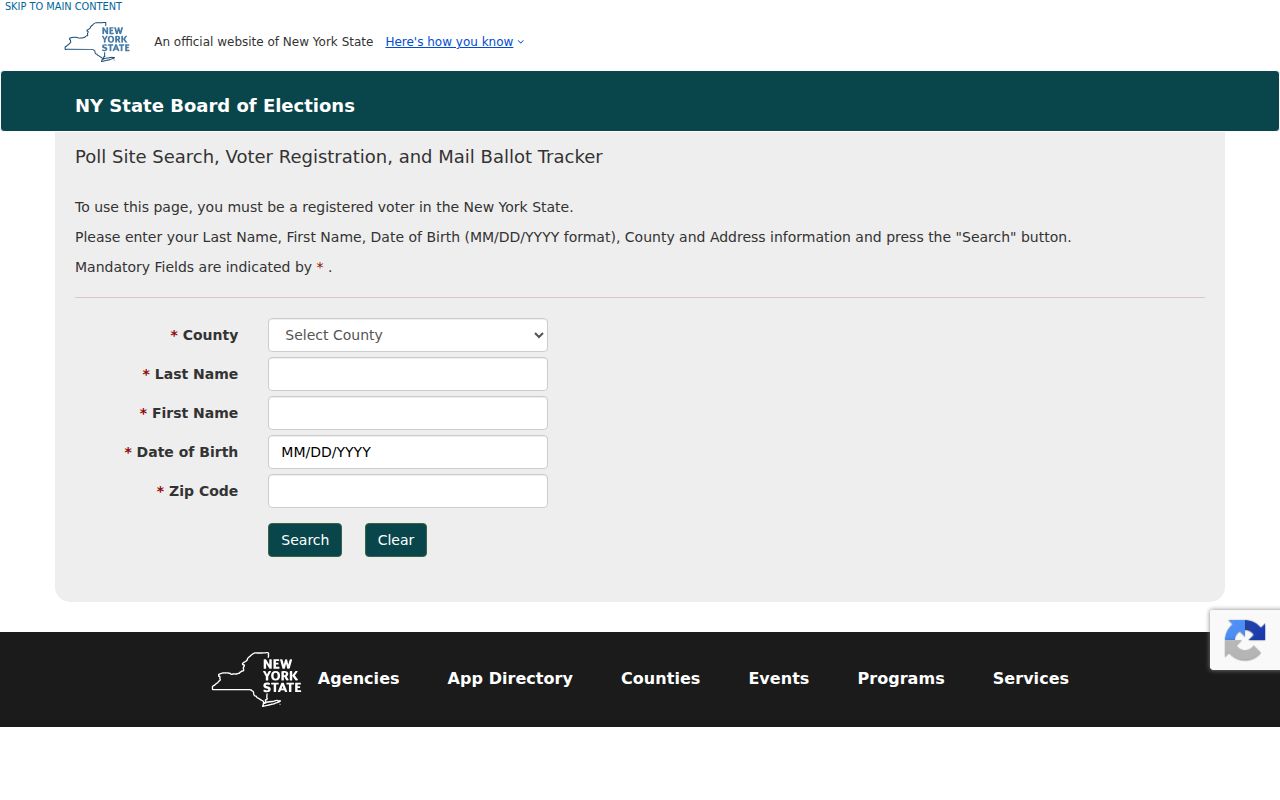
Keep voter information tied to its lawful purpose. It is one corroborating source, never a tool for assembling a public list of Nassau County neighbors.
Nassau County Court Name Checks
Court records help tell same-named people apart. But they reveal case context rather than where someone lives. WebCivil Supreme offers search paths by party, index number, attorney, justice, calendar, and document. WebCriminal covers participating criminal calendars and future appearances. Nassau Surrogate's Court runs a separate WebSurrogate route. It applies to records filed on or after February 19, 2014. Older probate searches must use courthouse public computers. Sealed matters, adoption proceedings, and wills lodged for safekeeping stay off the open web.
Bring a case number, case type, filing date, and court location whenever you can. Older files may sit in the Records Management Center rather than be truly missing. The County Clerk's guidance notes some pre-1999 court files need three to five business days for retrieval. Before tying a party result to a Nassau County resident, cross-check it against another dated record. The WebCivil Supreme search presents the party and case-search tabs available for court research.
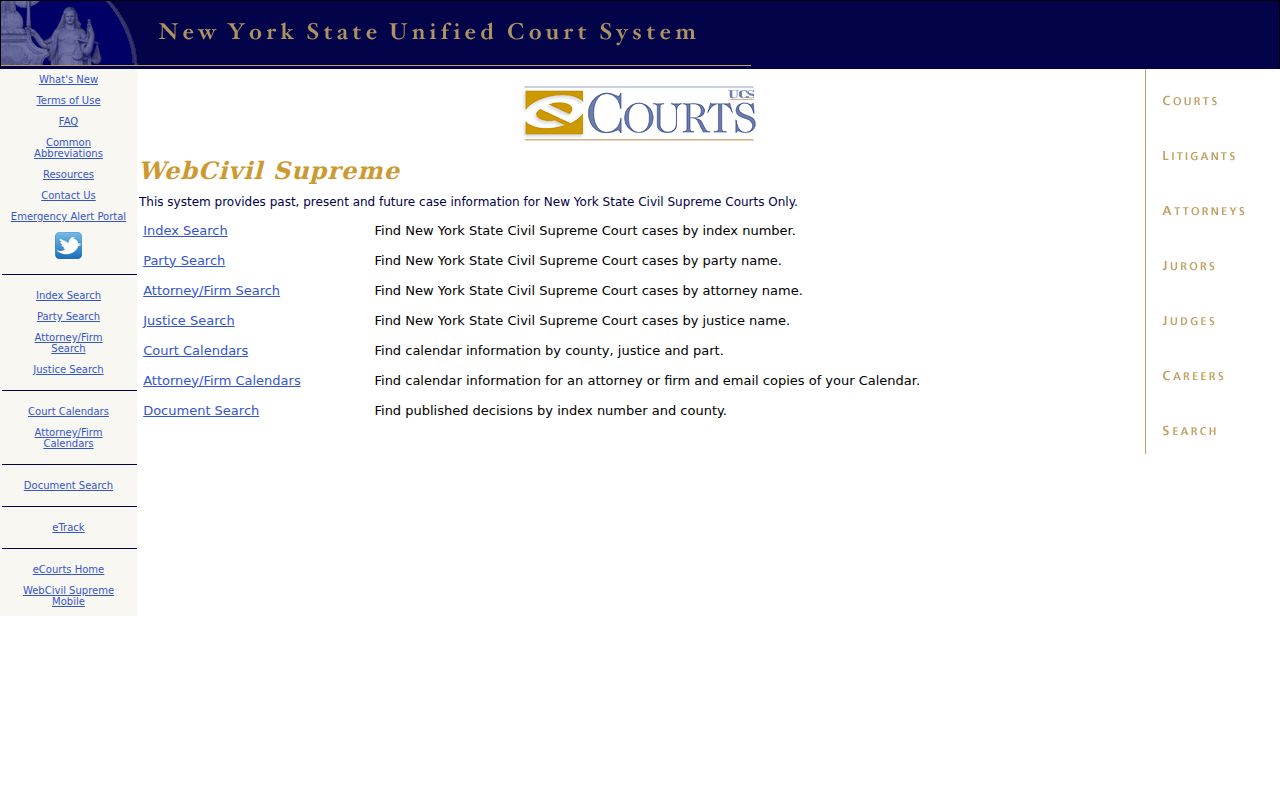
Case files can explain a name in the record. They still cannot replace the County Clerk, assessor, or local registrar for address and ownership questions.
Nassau County Vital Record Routing
Birth, death, and marriage records need a different Nassau County residents directory approach. The county itself is not the general registrar for current events. Local registrars in the towns and cities issue local certificates. The New York State Department of Health handles statewide routes. It covers eligible certificates and genealogy copies. Confirm the event municipality first. A post-office name is not always the town, village, or city that kept the record.
New York's genealogy route generally opens records after 75 years for births and 50 years for deaths and marriages. This applies once required death conditions are met. Direct-line exceptions, identification rules, and certificate restrictions still apply. The County Clerk's historical marriage collection is a narrow exception. It spans 1907 through April 29, 1935 rather than modern licensing. Ask the registrar or NYSDOH for the correct form before sending money or proof. The NYSDOH genealogy records page sets out the opening periods and application route.
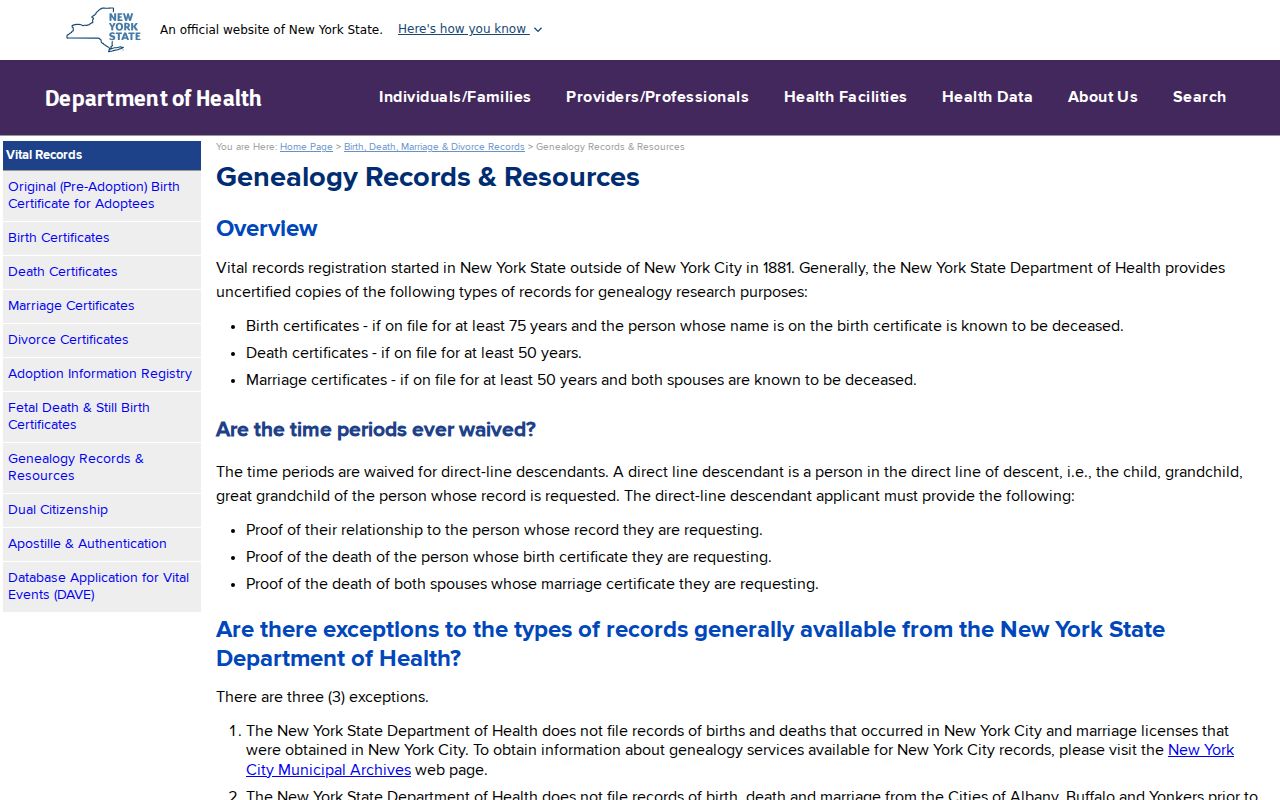
A genealogy copy can confirm an event within the allowed period. It is not a substitute for a current-residence record.
Nassau County Geography Before Names
Nassau County spans the Towns of Hempstead, North Hempstead, and Oyster Bay. It also includes the cities of Glen Cove and Long Beach. It also holds 64 incorporated villages and more than 100 unincorporated areas. That structure changes which clerk, permit counter, local court, or registrar is correct. ZIP codes, school districts, village names, town names, and post-office labels can each differ. Each can point to a different geographic system.
Start an address trail with the municipality and parcel, not the mailing label. For a property file, save the SBL and compare the physical, mailing, and legal descriptions. For a vital event, use Nassau County's registrar routing information. It will help you find the right town or city office. For a historical record, check the old street label and map context. Do this before calling an address a mismatch. This small step prevents many false matches in a Nassau County residents directory search.
Historical Nassau County Directory Collections
Historical material is the best route. The goal is placing a household in a past period. The New York State Library keeps city, county, and telephone directory holdings on noncirculating microform. Nassau Library System includes 54 independent member libraries. Directory and newspaper material often sits with a local branch rather than a central shelf. Hofstra's Long Island Studies Institute serves as a county-scale fallback. Its books, maps, newspapers, census material, genealogies, and government documents are usually open to non-Hofstra visitors by appointment.
A printed entry can carry a name, occupation, spouse or household notation, street address. It can also carry an abbreviation key. A criss-cross directory flips the question. It organizes entries from address to occupant. The Library of Congress holds Nassau criss-cross material for 1972 through 2007. Pair a directory year with a federal census release, New York's 1915 or 1925 census, a newspaper notice, or a deed date. That way one printed listing never stands in for a full household history. The Nassau County directory book identifies collection routes, entry clues, and map companions. It does not repeat a current address search.
Nassau County Newspapers and Images
Old Nassau County directories give a name and a street. Newspapers fill in the life around it. The New York State Library holds runs of Long Island papers. Titles and years vary. So pick a paper published near Hempstead, Glen Cove, Long Beach, or wherever in Nassau County the person lived. The Nassau County Photo Archives holds more than 100,000 prints, negatives, postcards, and slides. They date from about the 1870s through the 1970s. A street scene from that collection can date a house or block, even when it names no household.
Nassau County was created in 1899. The Clerk's land registry begins around that break. Records before and after the founding date sit in different places. The trail also moves across books, microfiche, microfilm, and electronic systems. So when a database search comes up empty, the answer may wait on a local shelf or in a historic index rather than online.
The New York State Library directory holdings are onsite and noncirculating. Ask a branch about its local-history collection before trusting a catalog result. Titles and year runs differ widely from one library to the next.
Nassau County Privacy Boundaries
Certain records sit outside any Nassau County residents directory by design. New York's Address Confidentiality Program gives qualifying participants a substitute mailing address and mail-forwarding protection. Confidential voter registration exists too. DMV address data stays closed. So do utility customer lists, sealed court material, adoption records, and restricted vital certificates. An existing agency record may still be requestable, but release requires the custodian's review under the relevant law.
Use public records for lawful ends. Family history, estate work, and civic understanding all fit. So does a verified property question. Never use an address trail to stalk, harass, intimidate, or harm anyone. A reported fact can be old, misspelled, or tied to someone with a similar name, so check the date, source, municipality, and a second identifier before acting.
Nassau County Fraud and Fund Checks
Two official tools handle narrower questions that a Nassau County residents directory search can raise. The County Clerk's property-fraud alert is free. It takes an owner name, an SBL, or both. It cannot stop a fraudulent filing, but it can shorten the gap between recording and discovery. The free state unclaimed-funds search refines an old-property search by name, city, ZIP, or Property ID, and a result there is an ownership-claim lead. That is not an address confirmation.
The County warns that its alert is not affiliated with private property-service solicitations. Claims for unclaimed funds require supporting information. A result alone proves no entitlement. Keep each tool on its own task. Return to the parcel, deed, or vital-record custodian for the underlying record.
The County Clerk property-fraud alert shows the official enrollment route by owner name or SBL.
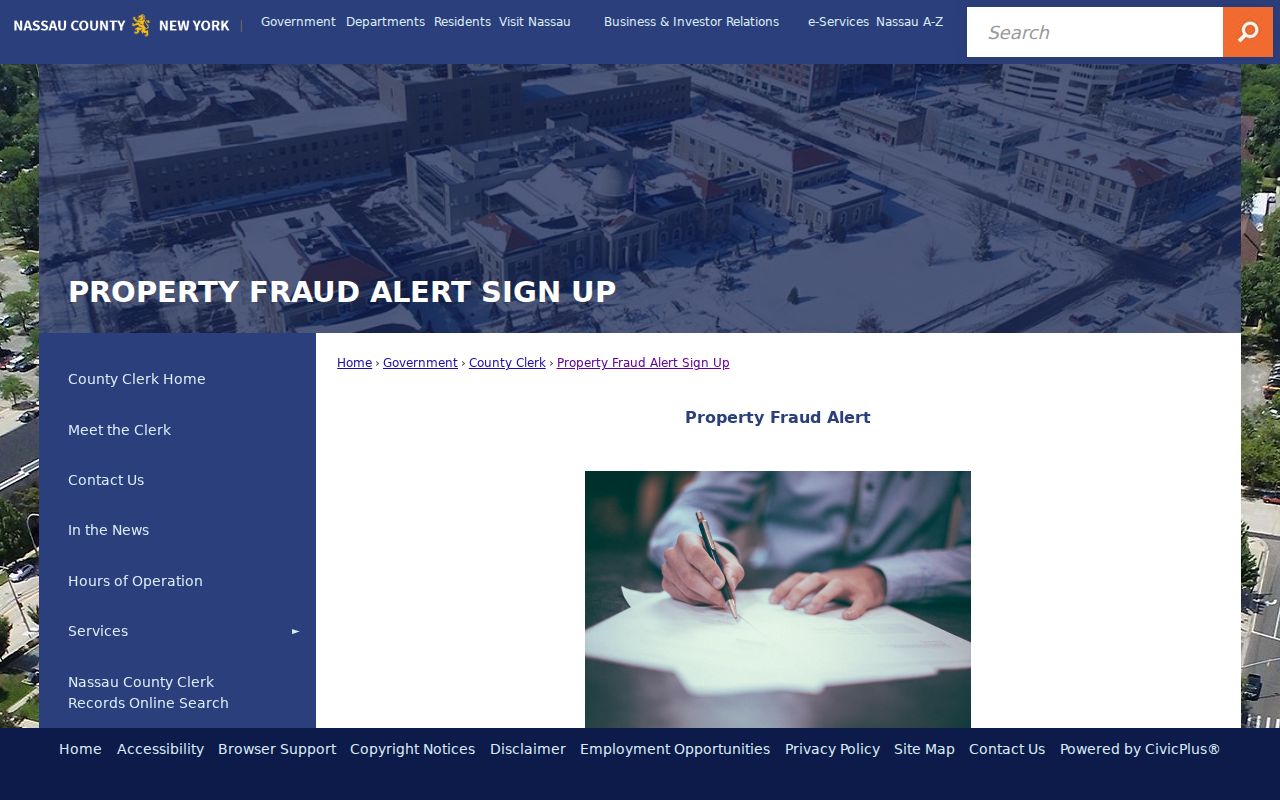
Use the free Clerk service for recording alerts. Verify every suspicious document with the County Clerk directly.
The New York unclaimed-funds search supplies the official name, city, and ZIP refinement path.
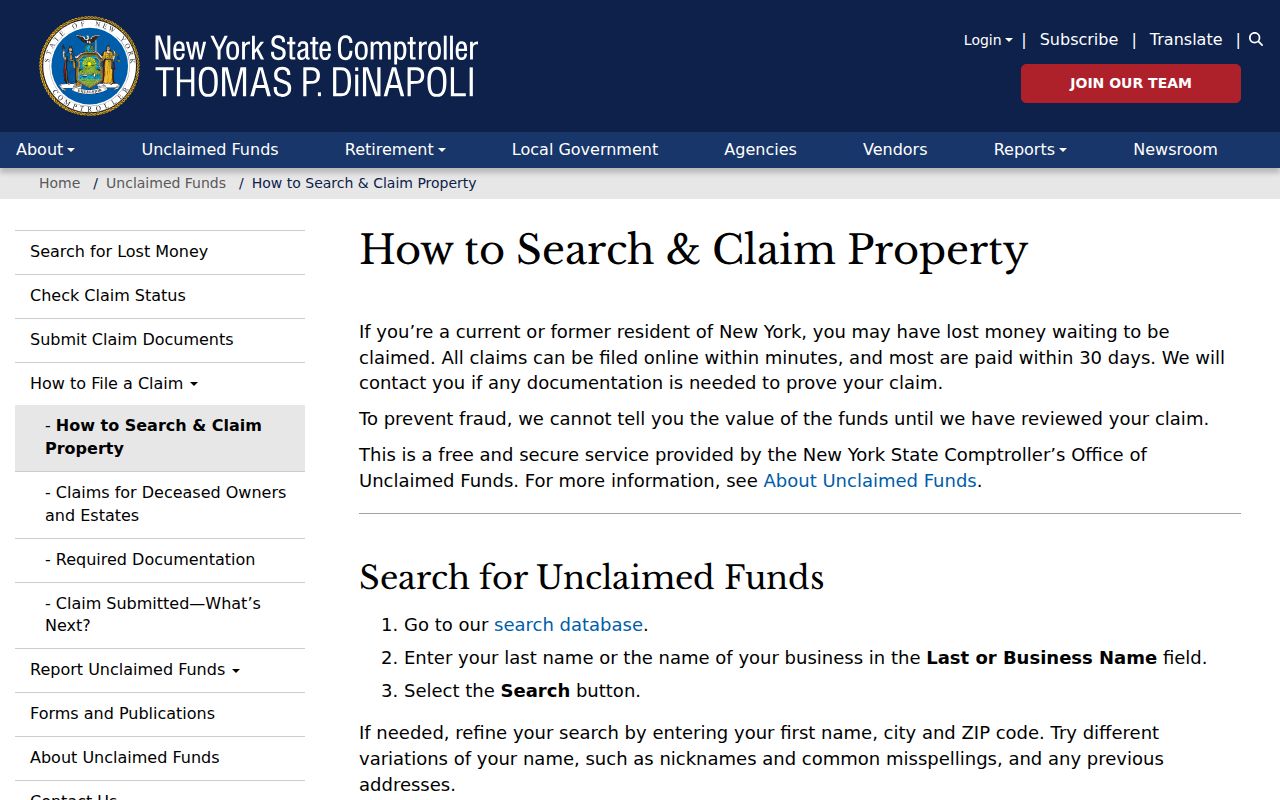
An unclaimed-fund entry can preserve an older city or ZIP.
Nassau County Custodian Fallbacks
Online forms are hardly the only way in. The County Clerk handles in-person, mail, delivery, lobby-drop-box, and e-recording procedures. Copy requests go by mail with payment or a prepaid account and a self-addressed stamped envelope. Records Management Center holdings may need a retrieval request. Assessment records and maps have office routes too. For permits or vital materials, start with the city, town, village, or registrar serving the address or event.
FOIL is the fallback. New York's Freedom of Information Law, Public Officers Law Article 6, §§84 through 90, covers identifiable Nassau County agency records with no other route. Name the address, SBL, date range, document type, or agency, so the records officer has a fair chance to locate and review the file. The county's FOIL forms and fee information also separate ordinary copies, maps, and assessment materials.
State prison status has its own lookup. The New York DOCCS inmate lookup gives DIN and name search instructions. County detention is a different population. The Nassau County correctional center publishes no public roster. Use its inmate-records contact or VINE instead.
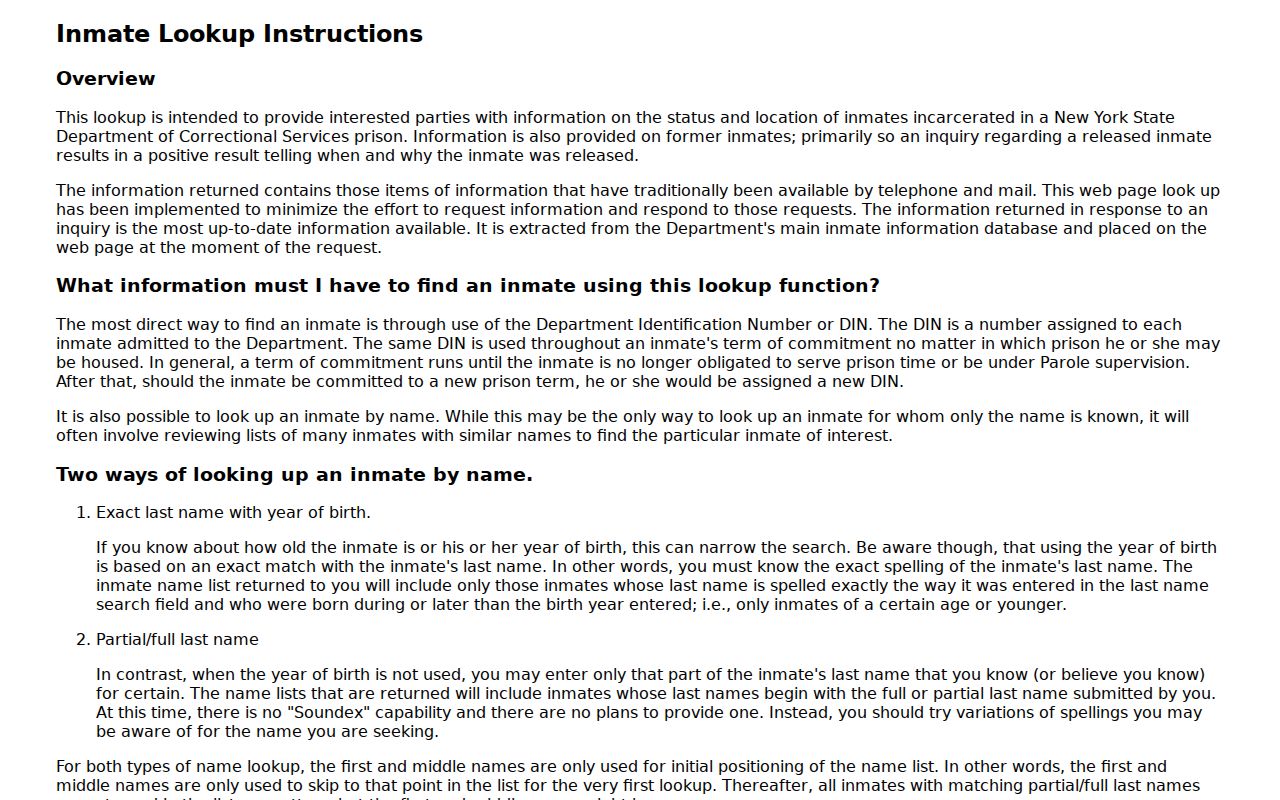
State prison and county detention records cover different groups, and neither one works as a Nassau County resident list.